Medicare Open Enrollment runs from October 15 to December 7, and for many people on Medicare the phone starts ringing well before the first day. A few of those calls are from plans you asked to hear from. Most are from lead sellers, aggressive marketers and scammers who know you expect to hear about coverage this time of year.
The short answer to “is this call real?” is usually in the rules. Medicare itself does not call to sell you anything, and private plans can’t call you unless you’re already a member or you gave them permission. Once you know that, most of these calls sort themselves.
October to January is when the calls pick up
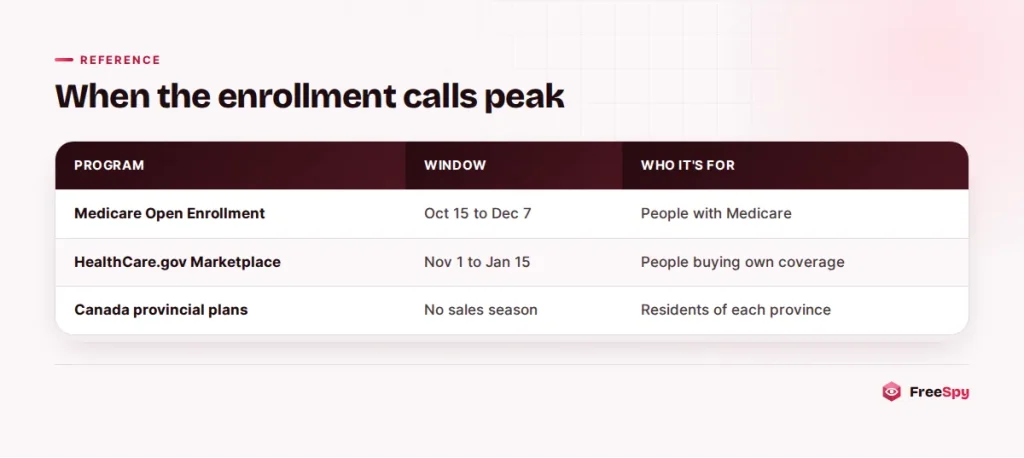
During Medicare’s Open Enrollment window, you can switch between Original Medicare and Medicare Advantage, join or drop an Advantage plan, or change your drug plan. People under 65 who buy their own insurance get a second season a few weeks later: HealthCare.gov opens enrollment for next year’s coverage on November 1 and closes it on January 15.
Put together, that’s three months in which a call about “your benefits for next year” sounds perfectly normal. Scammers rely on that.
The problem has been around for years. Health insurance calls were among the five unwanted call categories the FCC received the most complaints about in 2020. In the FTC’s Do Not Call Data Book for fiscal year 2025, “medical & prescriptions” is still one of the top complaint topics, next to reducing debt and imposters, and most of those complaints are about robocalls.
Medicare doesn’t cold call, and plans mostly can’t
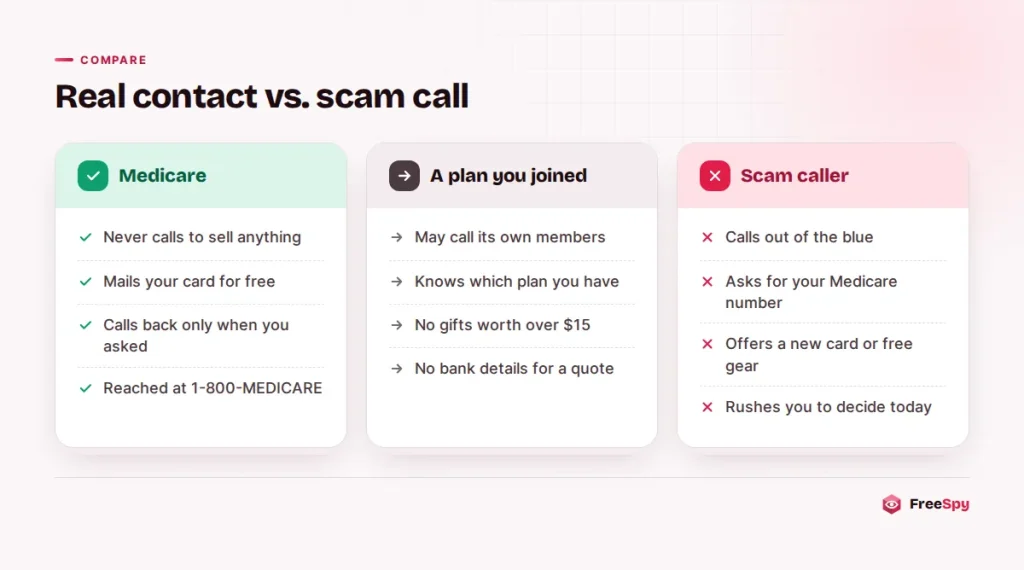
Medicare.gov puts it plainly: Medicare will never call you to sell you anything or visit you at your home. It calls and asks for personal information only in limited situations, such as when a representative returns a call you made.
Private Medicare plans and the agents who sell them have their own marketing rules. According to Medicare.gov, they can’t:
- call you unless you’re already a member of the plan or you’ve given them permission to contact you
- come to your home uninvited to sell anything
- offer you cash, or gifts worth more than $15, to join
- ask for bank account or credit card numbers over the phone, unless that’s needed to process an enrollment you asked for
A quote never requires your bank details. So an unexpected call from “Medicare” is not Medicare, and an unexpected call from a plan you never contacted is, at best, breaking the marketing rules.
The “permission” part is where things get murky. Many of these calls trace back to a health quote form filled out online, where the fine print allowed several companies to call. That is one of the main ways a number ends up on lead lists that get sold and resold.
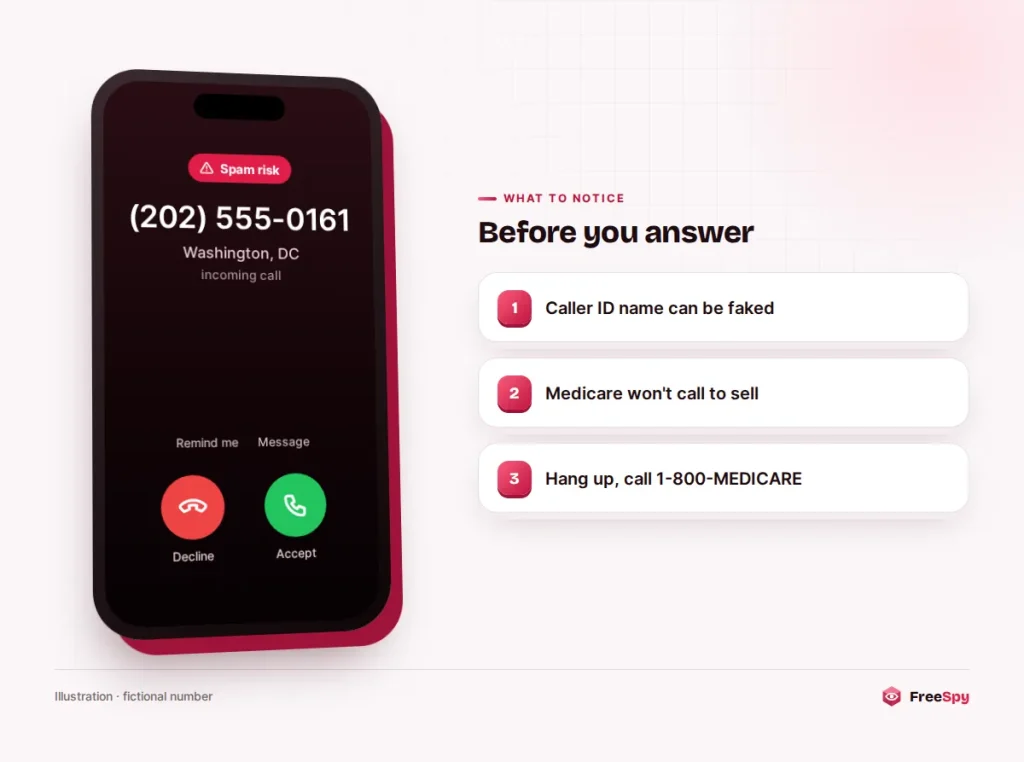
The name on your screen settles nothing. Caller ID can be faked, so a call can show “Medicare,” a Washington, DC number or a well-known insurer’s name and still be a scam. The FTC’s advice is to hang up and call 1-800-MEDICARE yourself. That one habit handles nearly every call in this article.
Four scripts that come back every fall
The wording changes from year to year. What the caller wants at the end barely does: your Medicare number, your Social Security number or a payment.
The card that’s supposedly “on hold”
“Hi, this is the Medicare benefits office. New plastic Medicare cards are going out this month, and yours is on hold. I just need to verify your Medicare number and the bank account where you receive Social Security so we can release it.”
Medicare cards are free and mailed automatically. There’s no hold, no fee and no verification call. The FTC says anyone asking you to pay for a new card, or asking for your number so they can send one, is a scammer.
Extra benefits, if you read out your number
“You may qualify for extra benefits next year, like dental, vision and money back on your Social Security check. It only takes two minutes to see if you qualify. Can you read me the number on your red, white and blue card?”
Some plans really do include extras. A cold call that leads with them and asks for your number before explaining anything is a lead-generation pitch at best. At worst, your number gets sold, or used to move you into a plan you never chose. An agent you contacted yourself can quote you a plan without your Medicare number.
The back brace your doctor never ordered
“Our records show your doctor approved a back brace and a knee brace for you at no cost. We just need to confirm your Medicare ID to ship them.”
The FTC warns about callers who bring up a medical equipment claim you don’t remember. Your number is then used to bill Medicare for things you never needed. Sometimes a box actually shows up at the door, which makes the whole thing feel legitimate.
The recording that ends with “press 1”
“This is an important message about your Medicare coverage. Changes may affect your benefits. Press 1 to speak with a licensed agent.”
Pressing 1 tells the dialer your line is live and connects you to someone paid to collect your details. In the US, a prerecorded sales call needs your prior written consent, which is one reason most of these calls are illegal under the federal robocall rules.
Under 65? The pitch is “affordable coverage,” and the risk is a fake plan
People who buy their own insurance hear a different script: “Obamacare plans,” “low-cost family coverage,” “a special government rate that ends Friday.” These calls often come from lead generators who pass your details to whoever pays the most.
The bigger danger here isn’t always identity theft. It’s paying for something that isn’t health insurance. The FTC warns about so-called health plans that cover few if any medical expenses, and points out that medical discount plans are not insurance and not a substitute for it.
Before you pay for anything sold over the phone, check that the company is licensed. Every company selling health insurance must be licensed by your state insurance commissioner, and your state insurance department’s website lets you look it up. Ask for a statement of benefits or a complete copy of the policy first; a real insurer can send one.
Free help really is free. The FTC notes that the people who offer legitimate help with the Health Insurance Marketplace aren’t allowed to charge you and won’t ask for personal or financial information.
A deal that vanishes unless you sign up today is reason enough to say no.
Scammers also buy search ads and build sites made to look like government pages. In its 2026 open enrollment alert, the FTC suggests typing HealthCare.gov or Medicare.gov into the browser yourself and checking for the .gov ending, instead of clicking an ad or a phone number in the search results.
Canadians get a version of this too
Canada has no enrollment season, because basic health coverage runs through each province or territory. The calls still come: private “supplemental” plans, health card “renewals,” free medical alert devices. Your provincial health plan does not phone people to collect health card numbers or take payments. If a caller claims to be from it, look up the number on your provincial government’s website and call that.
Unwanted sales calls go to the National Do Not Call List at 1-866-580-3625. Fraud attempts go to the Canadian Anti-Fraud Centre at 1-888-495-8501.
One question that ends most of these calls
Don’t confirm anything at the start, not even your name or whether you’re on Medicare. Many calls open with a yes-or-no question whose only purpose is to mark your number as a good lead.
Then ask: “Which plan am I a member of with your company?” A plan that’s allowed to call you knows the answer. If the caller dodges, hangs up or tries to change the subject, you have your answer too.
If you want to know more about the number before deciding, a reverse lookup on FreeSpy shows the line type, the region behind the area code, community reports filed under “Medicare/health insurance” and any FTC Do Not Call complaints about it.
When you do want help comparing plans, go to people who don’t sell them. Your State Health Insurance Assistance Program (SHIP) gives free one-on-one counseling. The FTC also points people to their local Senior Medicare Patrol for help spotting and reporting fraud.
You read your Medicare number to a caller. Now what?
Act the same day. A Medicare number can be used to bill for services you never got, which can cause problems with your records and your benefits later.
Start with 1-800-MEDICARE. Explain what happened and ask whether your card should be replaced with a new number.
Then watch your Medicare Summary Notices or plan statements for equipment, tests or visits you don’t recognize. Keep checking for several months, because fake claims don’t always appear on the next statement.
If someone switched you into a plan you didn’t choose, call Medicare and your old plan right away. Enrollment changes made during open enrollment can usually be undone if you move quickly.
A box of medical equipment you never ordered should go back unopened, and Medicare should hear about it.
If the caller also got a Social Security or bank account number, the next steps are about identity theft: freezing your credit, alerting your bank and watching your accounts.
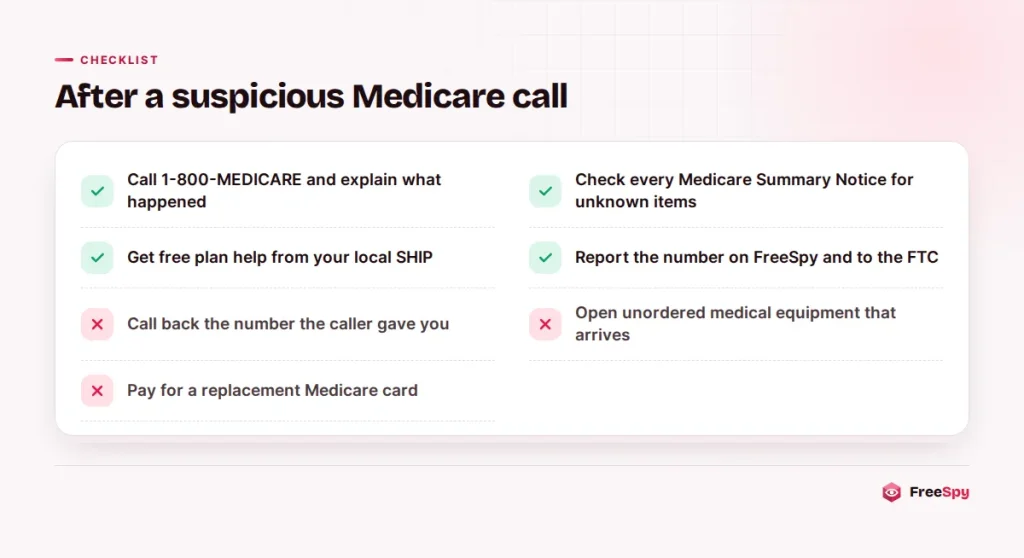
Where these reports go
Report in more than one place, because each report reaches a different team:
- Medicare impersonators and suspected Medicare fraud: 1-800-MEDICARE or Medicare.gov
- Scams in general: ReportFraud.ftc.gov; unwanted sales calls and robocalls: DoNotCall.gov or 1-888-382-1222
- Health insurance scams: your state attorney general, as the FTC suggests, and your state insurance department for unlicensed sellers
- In Canada: the Canadian Anti-Fraud Centre for fraud, the National DNCL for telemarketing
You can also add the number to FreeSpy’s reports under “Medicare/health insurance.” No account is needed, and the next person who looks it up will see the warning.
During open enrollment, it’s reasonable to let unknown numbers go to voicemail. A plan you asked to hear from will leave its name, and you can call back on the number printed on the plan’s own materials.
Questions people ask
Do I need a new Medicare card every year?
No. Your card doesn’t expire at open enrollment. If Medicare ever needs to issue a new one, it’s mailed to you for free.
A caller knew my name and birthday. Doesn’t that mean they’re legitimate?
No. Names, birthdays and addresses circulate widely through data breaches and marketing lists. A caller who already knows a few details is using them to get the rest.
Should I block every number that calls about Medicare?
Blocking a single number rarely helps, because these operations rotate through many numbers. Your carrier’s spam filter, the Do Not Call Registry and letting unknown calls go to voicemail during open enrollment cut down far more of them.
Sources
- FTC: Medicare Open Enrollment scams (2025)
- FTC: Avoid scams during Medicare’s Open Enrollment Period
- FTC: Avoiding health insurance scams at Open Enrollment (2026)
- FTC: Spot health insurance scams
- Medicare.gov: Reporting fraud
- Medicare.gov: Plan marketing rules
- HealthCare.gov: Dates and deadlines
- FCC: Top five unwanted call complaints
- FTC: Do Not Call Data Book FY2025